


What is a recurrent hernia?
A recurrent hernia is a hernia that appears again at the site of an earlier repair. It can happen after any type of hernia surgery, whether inguinal, umbilical or incisional, and whether the first repair was open or laparoscopic. Some recur within months; others many years later.
Studies report a recurrence in a few per cent of people after mesh repair of a groin hernia, and more often after incisional hernia repair. It is not rare, and it does not necessarily mean the first operation was done badly.
The signs are the same as the first time: a bulge that comes on standing or straining, a dragging ache, or discomfort near the old scar. Many people who come back with a recurrence feel discouraged. A second repair, planned carefully, can work well, and recurrent hernias are a particular focus of Dr. Sanjit's work.
Why hernias come back
There is rarely a single reason. Usually it is a mix of the patient's tissue and circumstances and the details of the first repair.
- Tissue factors: smoking, obesity, diabetes, older age and natural differences in collagen strength all weaken healing.
- Strain: chronic cough, constipation, straining to pass urine with an enlarged prostate, or heavy lifting too early after surgery.
- Mesh issues: a mesh that was too small, did not overlap the weak area enough, folded or moved.
- Repair without mesh: stitch-only repairs of all but the smallest hernias have a higher chance of recurrence.
- A missed hernia: sometimes a second weak spot, such as a femoral hernia, was not seen at the first operation.
- Infection: a wound or mesh infection after the first surgery weakens the repair.
Is it really a recurrence? The consultation
Not every lump or pain after hernia surgery is a recurrence. A seroma (fluid collection), scar tissue, a fat lump along the spermatic cord or nerve pain can all feel similar. Getting the diagnosis right comes first.
Dr. Sanjit examines you standing and lying down and usually arranges an ultrasound, sometimes performed while you strain. For incisional recurrences or when the picture is unclear, a CT or MRI scan is used.
When do you need surgery?
A recurrent hernia that causes symptoms or is growing is usually repaired. A small recurrence with few symptoms in an older or less fit person can sometimes be watched, with a clear plan for warning signs. If the bulge becomes suddenly painful, hard, will not go back in, or comes with vomiting, go to the nearest hospital emergency department straight away.
Before a planned redo, it is worth tackling whatever may have contributed to the recurrence: stopping smoking at least 4–6 weeks before surgery, bringing blood sugar under control, losing weight where needed, and treating a chronic cough, constipation or prostate symptoms. This gives the second repair the strongest chance of lasting.
The key principle: operate through a fresh plane
Scar tissue makes surgery harder and raises the risk of injuring nerves, blood vessels and the cord structures. International hernia guidelines therefore recommend, where possible, repairing a recurrence through a layer that the first operation did not touch.
| Previous repair | Usual approach for the redo |
|---|---|
| Open groin repair (from the front) | Laparoscopic TEP or TAPP (from behind) |
| Laparoscopic groin repair (from behind) | Open Lichtenstein repair (from the front) |
| Both open and laparoscopic before | Individual plan based on scans and previous notes |
| Umbilical or incisional repair | Laparoscopic or open, chosen on CT and the previous mesh position |
This is a general guide, not a fixed rule. In selected cases an experienced surgeon may choose a different route, and the old mesh may need to be partly removed if it is infected or causing pain. Dr. Sanjit explains which route he recommends for you and why.
Why experience matters in redo surgery
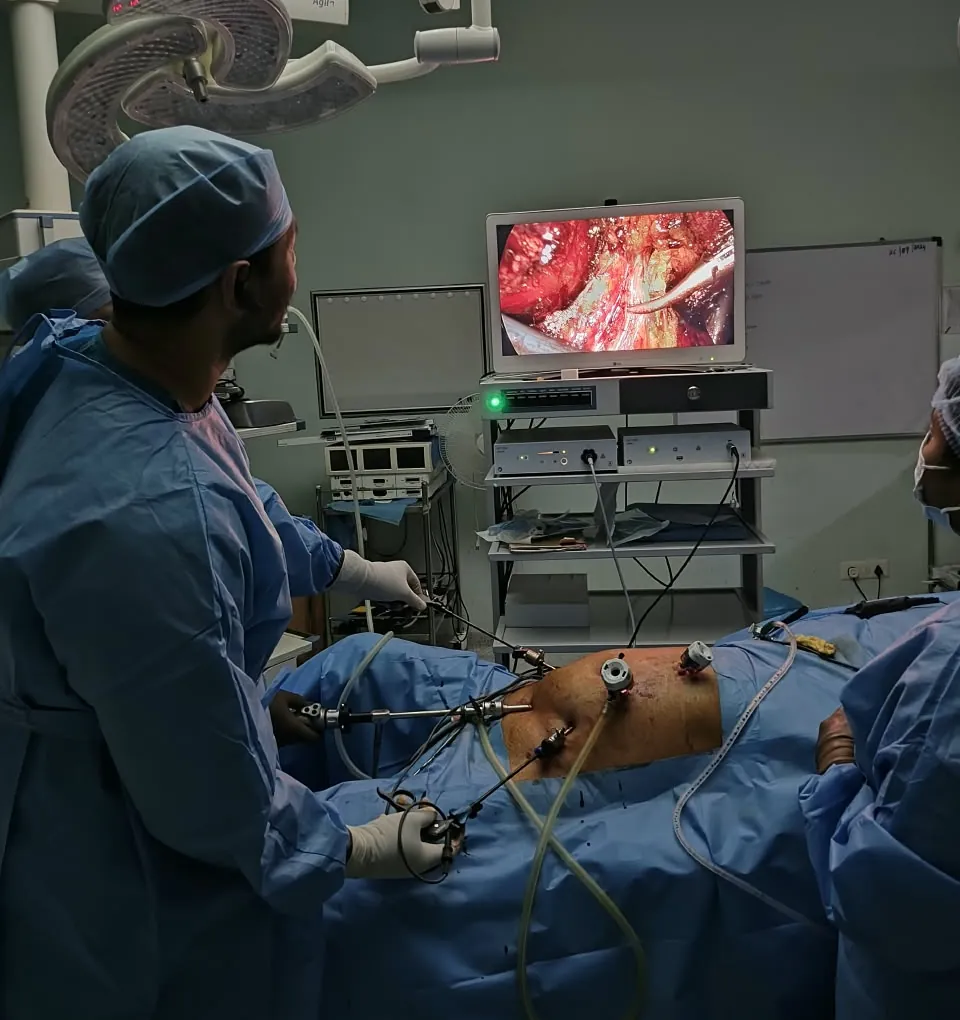
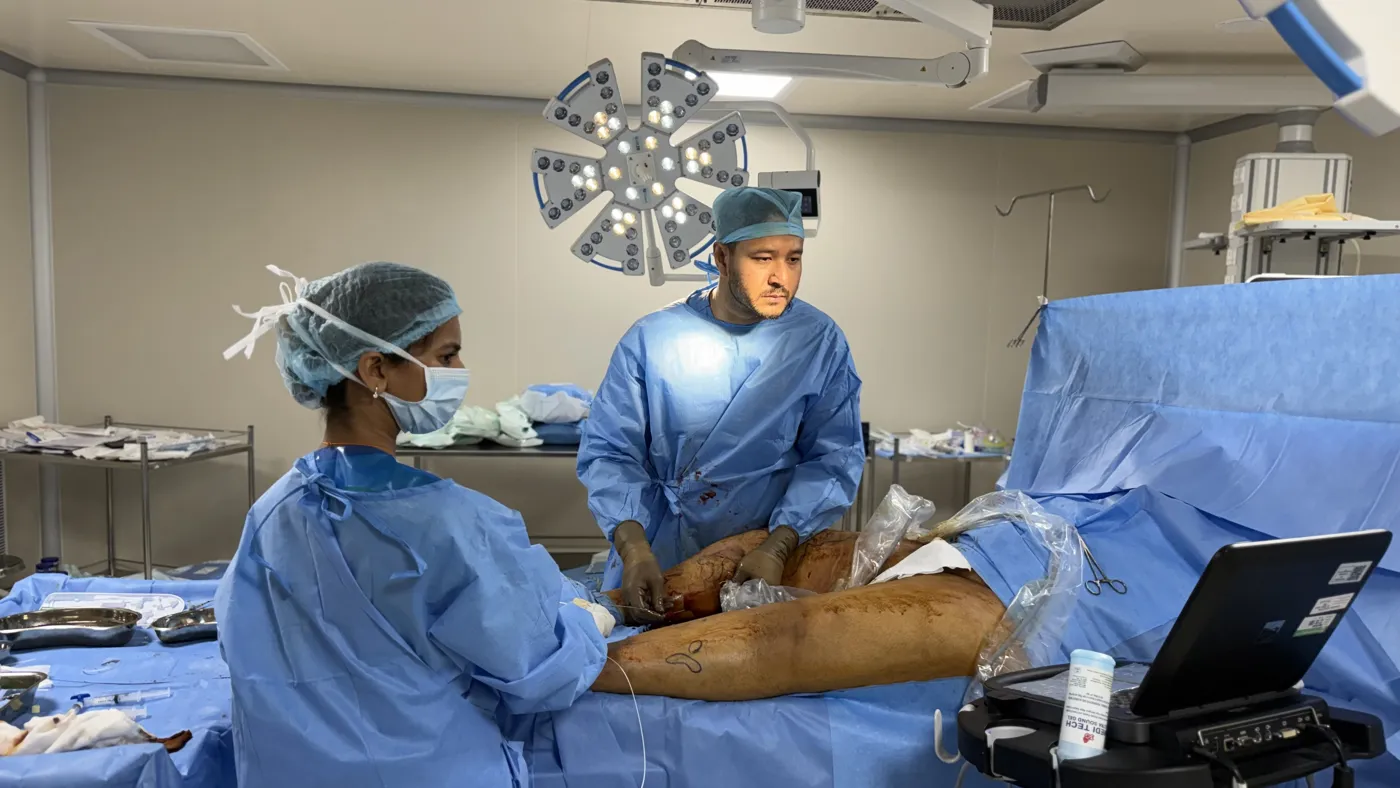
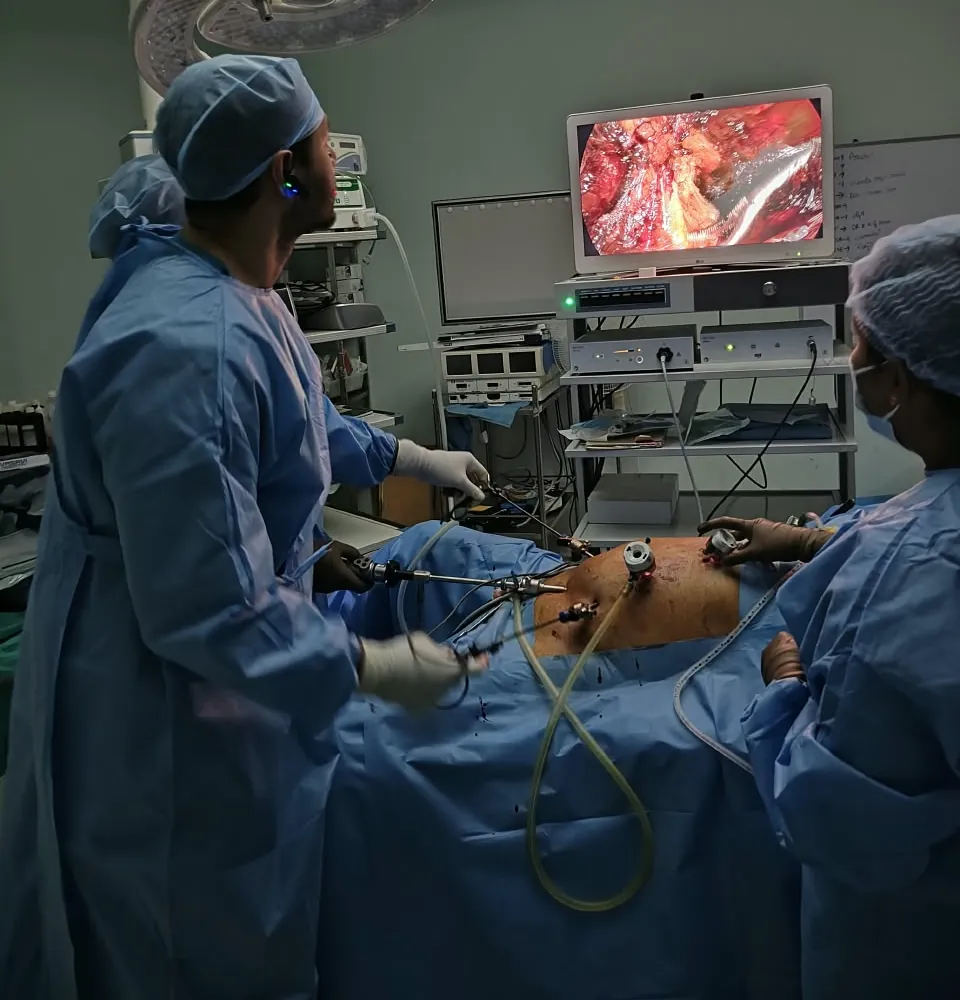
Redo hernia surgery is more demanding than a first repair. Normal anatomy is distorted by scar tissue and old mesh, and the surgeon needs to be comfortable with both open and laparoscopic techniques so the right one can be chosen for each patient, rather than the same one for everyone.
Dr. Sanjit has about 18 years in general and laparoscopic surgery, performs both open and keyhole hernia repairs, and has trained DNB surgical residents and mentored more than 50 young surgeons in minimal access surgery.
Before surgery, he goes through your previous operation notes with you, explains what most likely happened, and what will be done differently this time.
The procedure and recovery
A laparoscopic redo repair is done under general anaesthesia; an open redo groin repair can often be done under spinal anaesthesia. The operation usually takes longer than a first repair, roughly 1 to 2 hours for a groin recurrence and more for complex incisional recurrences.
Many patients go home the same day or the next morning after a groin redo; incisional recurrences may need one to three nights. Most desk workers return in about one to two weeks, and heavy lifting is usually avoided for four to six weeks. Larger repairs take longer, and you receive a written plan for your own case.
After surgery, walk regularly from the first day, avoid straining, and keep your review appointment so the repair can be checked. You have a direct line to Dr. Sanjit for questions while you recover.
Risks and how they are reduced
Risks are somewhat higher than after a first repair, and Dr. Sanjit discusses them openly before you decide.
- Long-term pain: more likely after repeated surgery in the same area. Using a fresh plane and protecting nerves help reduce it.
- Testicular problems in men: swelling, and rarely reduced blood supply to the testis, are more likely after repeat open groin surgery. Approaching from behind after an earlier open repair lowers this risk.
- Another recurrence: studies report it more often after redo surgery than after a first repair. Correct mesh size and overlap, and treating smoking, weight and cough, help.
- Seroma, bruising and infection: usually manageable and short-lived.
- Injury to bowel, bladder or vessels: uncommon, but more of a concern with dense scar tissue.
Cost and booking
Recurrent repairs usually cost more than a first repair, because they take longer and may need a larger or specialised mesh. Indicative ranges are on the hernia surgery cost page.
Dr. Sanjit consults and operates at SPARSH Hospital, Sarjapur Road, from 10 am to 5 pm, and sees patients at his evening clinic in Doddakannelli from 5 pm to 8 pm, Monday to Saturday. Patients come from Sarjapur Road, HSR Layout, Bellandur and Koramangala. Book a consultation, or send your old operation notes and scan on WhatsApp first.
MBBS, MS (General Surgery), MRCS (Edinburgh). General and Minimal Access Surgeon with about 18 years in general, laparoscopic and laser surgery. Consults at SPARSH Hospital, Sarjapur Road (10 am – 5 pm) and his evening clinic in Doddakannelli (5 – 8 pm). KMC Reg. No. 96096. More about Dr. Sanjit