


What is an incisional or ventral hernia?
An incisional hernia is a bulge that appears through the scar of a previous abdominal operation, where the muscle layer has not healed fully. Ventral hernia is the broader term for any hernia in the front of the abdomen, including incisional, umbilical and epigastric hernias.
Incisional hernias are common. Studies report them in roughly 1 in 10 people after a large open abdominal operation, and more often after a wound infection or in people with obesity. Most appear within the first few years, though some show up much later.
Signs include a bulge along or near the scar that grows when you stand, cough or strain, a dragging discomfort, and difficulty with lifting or bending. Large hernias can stretch the skin thin and make clothes fit differently.
After a C-section or an old operation
Any abdominal operation can leave a weak spot. Common ones Dr. Sanjit sees include hernias after a caesarean section (particularly after more than one, or after a vertical cut), open appendix or gallbladder surgery, gynaecological surgery, and larger midline operations for the bowel or an emergency.
Hernias can also form at the site of a laparoscopic port, most often at the belly button. Bring the discharge summary or operation notes of your earlier surgery if you have them; they help plan the repair.
When do you need surgery?
Repair is usually advised when the hernia causes pain or discomfort, is getting bigger, is hard to push back, makes the overlying skin thin, or has caused episodes of colicky pain and vomiting.
A small hernia without symptoms, or a hernia in someone for whom surgery carries high risk, can be watched with an abdominal binder for support. Waiting is a choice made with your surgeon, with a clear list of warning signs.
Diagnosis: the consultation and CT scan
Dr. Sanjit examines the whole scar standing and lying down, as there is often more than one gap. He asks about the earlier surgery, any wound infection, your weight, smoking, diabetes and breathing.
A CT scan of the abdomen is usually advised. It shows the width of each defect, what is inside the hernia, the condition of the muscles and how much of the bowel has moved out of the abdomen. These measurements decide which repair is suitable, and he goes through the images with you.
Getting ready: weight, smoking and sugar
Incisional hernias come back more often than groin hernias, and most of the risk factors are things that can be improved before a planned repair. This preparation is often as important as the operation itself.
- Stop smoking: ideally at least 4–6 weeks before surgery. Smoking slows healing and raises the risk of infection and recurrence.
- Weight: losing weight before a planned repair lowers the strain on the repair and the risk of wound problems. For some patients with severe obesity, weight-loss treatment, including bariatric surgery, may be discussed first.
- Blood sugar: good diabetes control before surgery reduces infection risk.
- Cough and constipation: treating a chronic cough, constipation or prostate symptoms reduces straining after the repair.
Surgery is not always delayed for these steps; if the hernia is causing problems it may be repaired sooner. The balance is discussed honestly at consultation.
Treatment options
Almost all incisional hernias are repaired with mesh, as stitch repair alone has a high recurrence rate. The main options are:
Laparoscopic IPOM
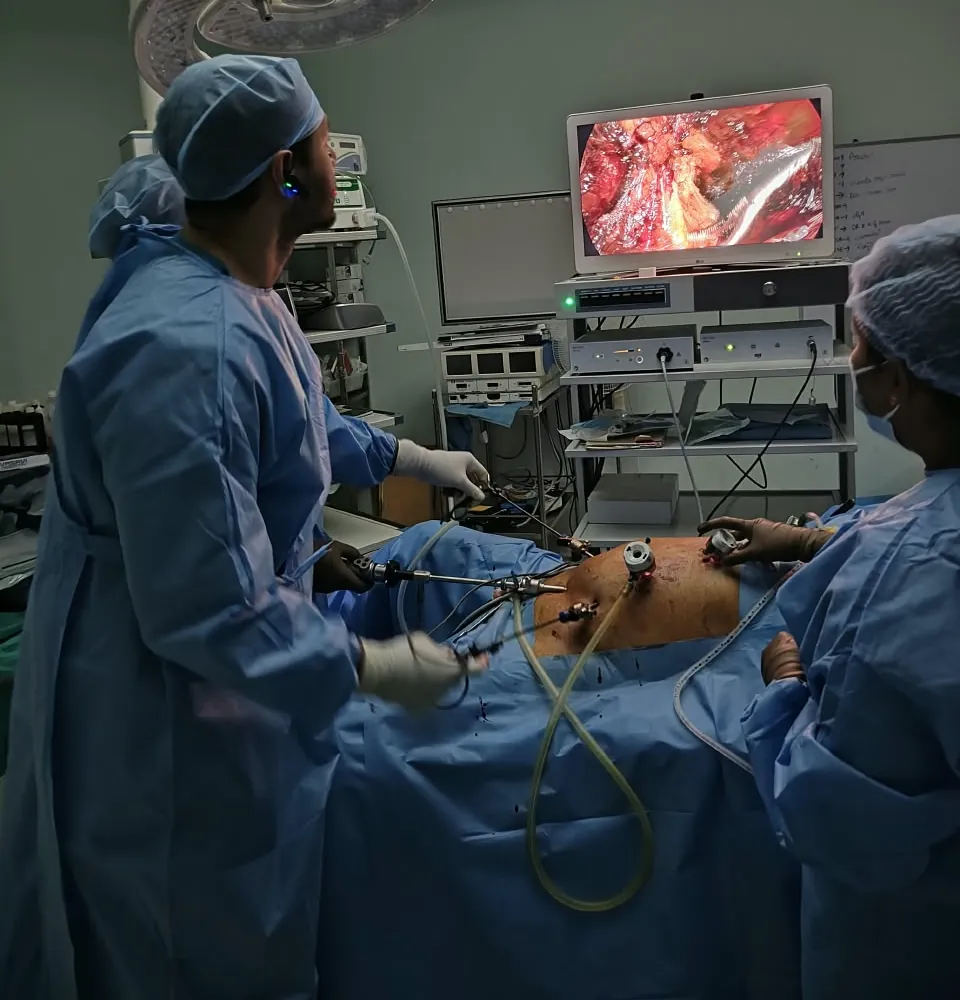
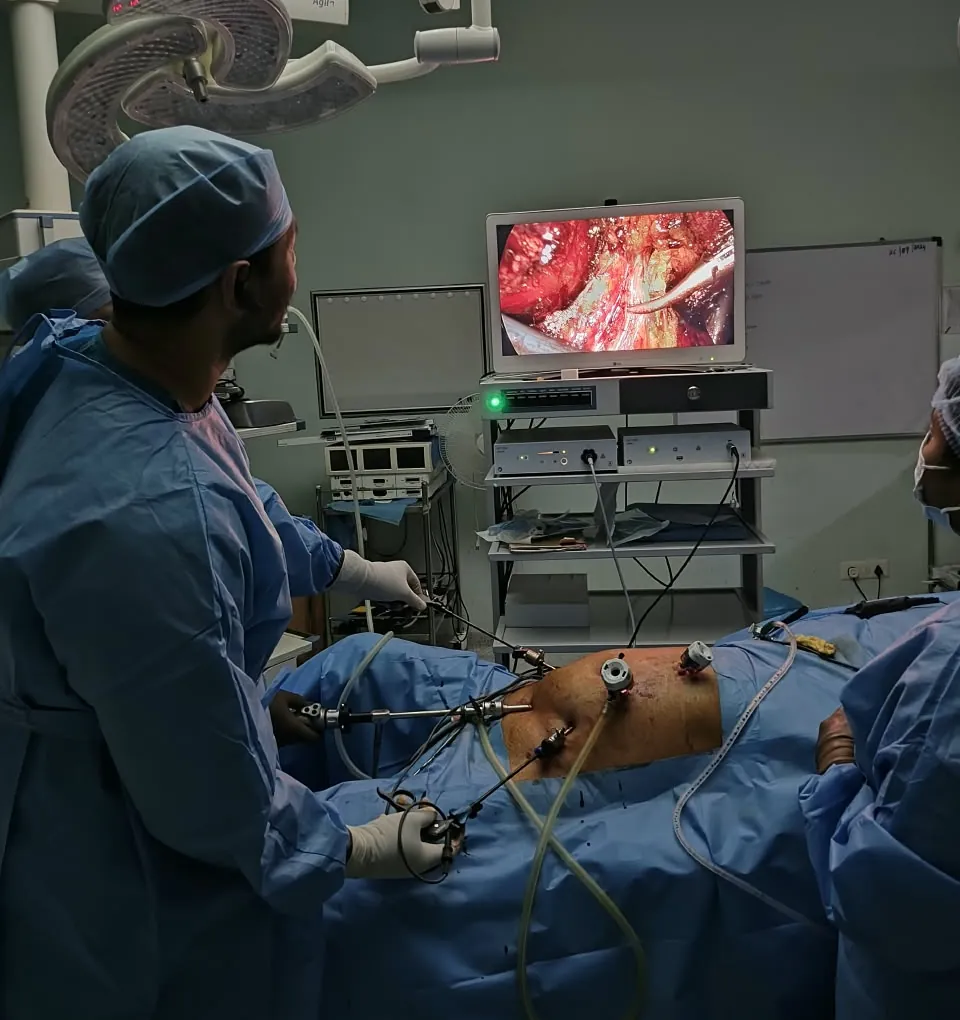
Through small cuts at the side of the abdomen, any bowel stuck to the old scar is freed, the gap is stitched closed where possible, and a coated mesh is fixed to the inside of the abdominal wall. This often suits small to medium defects and people with several small gaps.
Laparoscopic eTEP
A newer keyhole technique that places the mesh between the muscle layers, outside the abdominal cavity. It is technically demanding and suits selected patients; Dr. Sanjit will tell you whether it is appropriate for your hernia.
Open repair
Through the old scar, the muscle layers are brought together over a mesh placed behind the muscle. Very large hernias may need techniques that release the side muscles so the abdominal wall can be closed. Open repair also allows removal of excess skin or an old unsightly scar.
Dr. Sanjit's usual recommendation: for small to medium hernias, a laparoscopic repair is usually the right fit, with smaller cuts and less wound trouble. For very large hernias, loss of muscle strength or a scar that needs removing, an open repair is often more suitable.
The procedure and recovery
The operation is done under general anaesthesia and usually takes 1 to 3 hours, depending on the size and number of defects. Most patients stay one to three nights; larger open repairs may need longer and sometimes a drain.
| Time | What most patients can do |
|---|---|
| Day 0–1 | Sit out of bed and walk with help |
| Days 1–3 | Go home once eating, walking and pain is controlled with tablets |
| 2–3 weeks | Desk work and short drives |
| 4–6 weeks | Normal household work; binder often worn during the day |
| 6–12 weeks | Heavier lifting and full exercise, as advised |
An abdominal binder (a wide elastic belt) is usually advised for some weeks after surgery. It supports the wall, eases discomfort when moving and may help reduce fluid collecting where the hernia was.
Before you go home, you are shown how to get out of bed by rolling onto your side first, which is more comfortable and puts less strain on the repair. Keep your bowels soft and hold a pillow against the wound when you cough.
Risks and how they are reduced
- Seroma: fluid in the space where the hernia was is common, especially after laparoscopic repair, and usually settles over weeks.
- Wound or mesh infection: uncommon, more likely with smoking, diabetes and obesity, which is why preparation matters.
- Pain: aching at fixation points can last a few weeks.
- Bowel injury: uncommon but more of a concern in incisional hernias, because bowel is often stuck to the old scar; it is freed carefully.
- Recurrence: higher than after groin hernia repair and linked to defect size, weight and smoking. A well-sized mesh with good overlap and closure of the gap help lower it.
Cost, and why patients from Sarjapur Road, HSR and Bellandur see Dr. Sanjit
The cost of incisional hernia repair varies more than any other hernia, because the size of the defect decides the size and type of mesh, the fixation and the length of stay. Indicative ranges are on the hernia surgery cost page.
Dr. Sanjit has about 18 years in general and laparoscopic surgery, an MS in General Surgery and the MRCS (Edinburgh). Abdominal-wall hernia repair, including recurrent hernias, is central to his work. He consults and operates at SPARSH Hospital, Sarjapur Road, from 10 am to 5 pm, and sees patients at his evening clinic in Doddakannelli from 5 pm to 8 pm, Monday to Saturday. Book a consultation or send your CT report on WhatsApp.
MBBS, MS (General Surgery), MRCS (Edinburgh). General and Minimal Access Surgeon with about 18 years in general, laparoscopic and laser surgery. Consults at SPARSH Hospital, Sarjapur Road (10 am – 5 pm) and his evening clinic in Doddakannelli (5 – 8 pm). KMC Reg. No. 96096. More about Dr. Sanjit