


Background and training
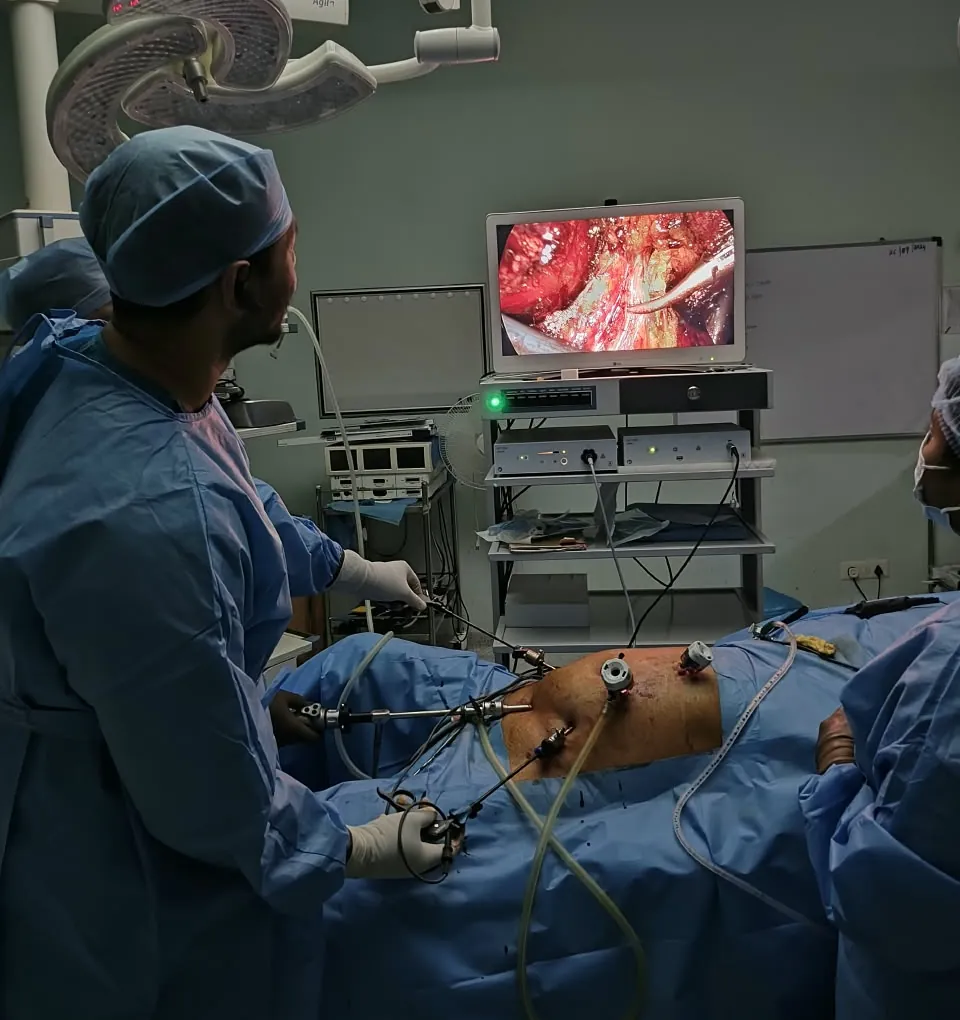
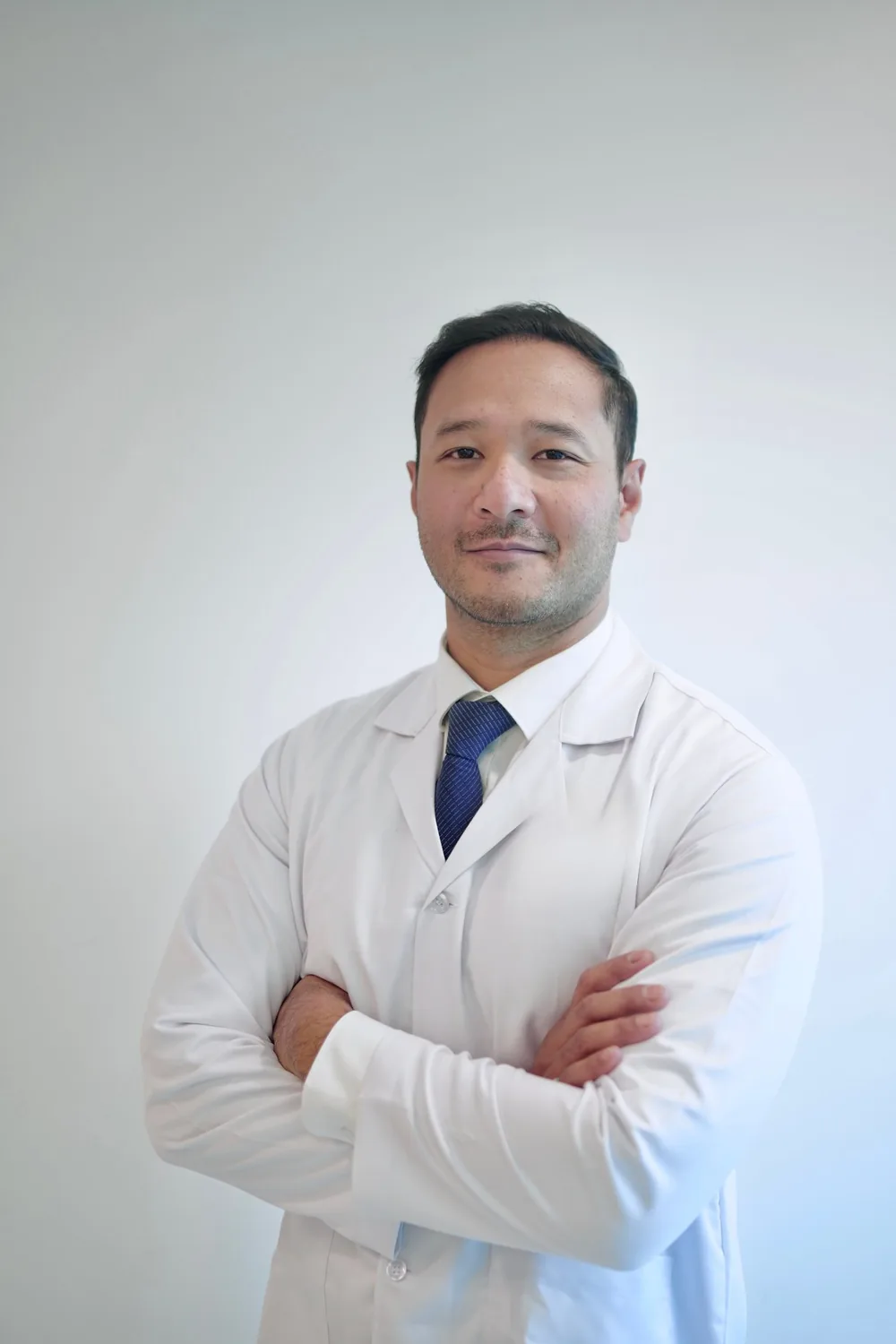
Dr. Sanjit Gogoi is a General and Minimal Access (Laparoscopic) Surgeon who consults on Sarjapur Main Road in Bangalore. He has spent about 18 years in general, laparoscopic and laser surgery, and has performed more than 6,000 procedures across open, keyhole and laser techniques.
He studied medicine at Kathmandu University, completed his postgraduate surgical training in Karnataka, and then passed the membership examinations of the Royal College of Surgeons of Edinburgh.
| Year | Qualification | Institution |
|---|---|---|
| 2008 | MBBS | Kathmandu University |
| 2015 | MS, General Surgery | Rajiv Gandhi University of Health Sciences, Karnataka |
| 2016 | MRCS | The Royal College of Surgeons of Edinburgh |
| Today | Consultant General & Minimal Access Surgeon | SPARSH Hospital, Sarjapur Road, and his evening clinic in Doddakannelli |
Over these years his work has moved steadily towards minimal access surgery: operating through small ports, a camera, a laser fibre or a needle wherever that is safe, and keeping open surgery for the cases that genuinely need it.
What he treats
Most of Dr. Sanjit's work falls into a handful of areas. Each link below leads to a page that explains the condition, the options and the recovery in more detail.
- Hernia: laparoscopic mesh repair of groin, belly-button, incisional and ventral hernias, including hernias that have come back after an earlier repair.
- Gallbladder: keyhole removal of the gallbladder for stones, including inflamed and difficult gallbladders.
- Appendix: laparoscopic appendicectomy, both planned and as an emergency.
- Laser proctology: treatment for piles, fissure, fistula and pilonidal sinus.
- Veins: endovenous laser (EVLA) and glue closure for varicose veins, and varicocele surgery.
- Lumps and minor surgery: lipoma and sebaceous cyst removal, hydrocele and circumcision.
- Weight-loss surgery: bariatric and metabolic surgery, a newer part of his practice, planned with a wider medical team.
How he works
Patients who see Dr. Sanjit tend to notice the same thing: the consultation is unhurried. He examines you, then sits down with your scan or report and walks you through what it shows, in plain words and with a quick sketch if that helps.
He then lays out every reasonable option, including not operating. Some small hernias, silent gallstones and mild piles can safely be watched for a while, and he will tell you when that is the case. When surgery does make sense, he explains why, which approach he would use and what the realistic risks are.
- Your scan, explained. You leave knowing what the problem is and why it matters.
- Options side by side. Surgery, medicines, diet and lifestyle changes or watchful waiting, each with honest pros and cons.
- A written recovery plan. When to walk, shower, drive, return to desk work and lift again, written down so your family has it too.
- Reachable after surgery. Patients keep a direct line for questions while they recover, so a worry at night does not have to wait for the next appointment.
Family members are welcome at the consultation. Bringing a spouse, parent or grown-up child often makes the decision easier, and Dr. Sanjit is happy to answer their questions as well.
His approach to minimal access surgery
Minimal access surgery means doing the same operation through a smaller opening: ports of 5 to 10 mm for a camera and instruments, a thin laser fibre, or a needle placed under ultrasound guidance. For most patients this changes the recovery more than the operation itself, with smaller scars, less pain afterwards and an earlier return to normal life.
It is not right for every case. Some very large hernias, some emergencies and some patients with heart or lung problems are safer with an open operation or a different plan. Dr. Sanjit chooses the approach case by case and explains his reasoning, so you know why a keyhole, laser or open operation has been recommended for you. More detail is on the laparoscopic surgery page.
Teaching and training surgeons
Alongside his own operating lists, Dr. Sanjit has spent years teaching. At Manipal Hospital he trained DNB surgical residents, the postgraduate doctors working towards their surgical qualification, and he has mentored more than 50 young surgeons in minimal access technique.
Teaching keeps a surgeon careful. Explaining each step of an operation to a trainee, and why it is done that way, is good discipline, and it carries over into how he explains things to patients and their families. He continues to follow developments in minimal access surgery and adopts them where the evidence supports their use.
Where he consults
Both of Dr. Sanjit's consultation rooms are on Sarjapur Main Road, a short drive for patients from HSR Layout, Bellandur, Koramangala and the rest of South-East Bangalore.
- Day, 10 am to 5 pm: SPARSH Hospital, Sarjapur Road, #76, SY No. 26/7, Sarjapur Main Road, Carmelaram, Bengaluru 560035. He consults and operates here.
- Evening, 5 pm to 8 pm: the evening clinic in Doddakannelli, 3rd Floor, SGR-2, Sarjapur Main Road, Doddakannelli, Bengaluru 560035.
Consultations run Monday to Saturday, by appointment, and the clinic is closed on Sundays. You can book a consultation by call or WhatsApp on +91 99160 26256. More about reaching both locations is on the Sarjapur Road page.
Registration and memberships
Dr. Sanjit is registered with the Karnataka Medical Council, KMC Reg. No. 96096. You are welcome to check this registration in the council's records.
He holds the MRCS, Membership of the Royal College of Surgeons of Edinburgh, awarded in 2016 after the college's two-part examination in applied surgical science and clinical skills.