



The short answer
Piles (haemorrhoids) are swollen blood vessels in the anal canal that typically bleed and may form a lump, often without much pain. A fissure is a small tear in the lining of the anus that causes sharp, cutting pain during and after passing stool. A fistula is a small tunnel between the inside of the anal canal and the skin outside, usually left behind by an abscess, that keeps leaking pus or blood.
They are three different problems with different treatments, but they can feel similar, and sometimes two are present together. That is why an examination matters more than guessing.
Piles, fissure and fistula compared
| Symptom | Piles | Fissure | Fistula |
|---|---|---|---|
| Pain | Usually mild or none; severe only if a pile clots or gets stuck outside | Sharp, cutting or burning pain during motion, lasting minutes to hours afterwards | Throbbing pain and swelling that builds up and eases once pus drains |
| Bleeding | Bright red blood dripping into the pan or on the paper, sometimes quite a lot | Small streak of bright red blood on the stool or paper | Blood mixed with pus, staining the underwear |
| Lump | Soft lump that may come out on straining and go back by itself or with a push | Small skin tag at the edge of the anus in long-standing fissures | Small opening or boil-like bump on the skin near the anus |
| Discharge | Mucus and itching, mainly with larger piles | Usually none | Pus or watery discharge that keeps coming back |
| Typical cause | Constipation, straining, long sitting on the toilet, pregnancy, low-fibre diet | Passing a hard or large stool; sometimes diarrhoea or childbirth | An anal abscess (infected gland) that burst or was drained but did not fully heal |
| Usual first step | Fibre, fluids and medicines; a procedure or laser for larger or bleeding piles | Stool softeners and prescribed ointments; a procedure if it does not heal | Surgery, as a fistula very rarely closes with medicines |
This table shows typical patterns. Real symptoms are often less tidy, and one person can have more than one of these conditions.
Piles (haemorrhoids) in more detail
Everyone has cushions of blood vessels in the anal canal; they help with control. They become piles when they swell and slip down, usually from straining with constipation or sitting for long on the toilet (scrolling on the phone does not help). Internal piles are graded 1 to 4 according to how far they come out.
Early piles are usually managed first with more fibre and water, not straining, and medicines your doctor prescribes, and many settle this way. Larger, bleeding or prolapsing piles may need banding, laser treatment or surgery. See piles treatment for the options, and the piles surgery cost guide for what affects the price in Bangalore.
Anal fissure in more detail
A fissure is a small split in the delicate skin at the anal opening, most often at the back. The tear makes the ring of muscle around the anus go into spasm, which reduces blood flow and stops the tear from healing. A cycle of pain, and fear of the next motion, sets in. The pain is often described as passing glass.
Most new (acute) fissures heal within about 6–8 weeks with softer stools, warm sitz baths and prescribed ointments that relax the muscle. A fissure that lasts longer is called chronic and may need further treatment, such as a muscle-relaxing injection or a minor procedure to ease the spasm. More on anal fissure treatment.
Anal fistula in more detail
A fistula usually starts as an anal abscess: a painful, swollen, sometimes feverish boil near the anus caused by an infected gland. When the abscess bursts or is drained, a tunnel can remain between the gland inside the anal canal and the skin outside. It then keeps discharging, closing over, swelling up and discharging again.
Antibiotics may calm an episode, but they do not close the tunnel. Treatment is surgical, and the method depends on how the tunnel runs in relation to the sphincter muscles that control continence; an MRI scan is sometimes needed to map it. Options include laying the tract open, a seton (a soft thread placed through the tract), and sphincter-saving techniques including laser. See anal fistula treatment.
A painful swelling with discharge higher up, between the buttocks near the tailbone, is usually a different condition called a pilonidal sinus.
Why self-diagnosis is unreliable
Many people label any problem down there as "piles" and buy an ointment, or put off a check-up because of embarrassment. There are good reasons not to:
- The symptoms overlap. Bleeding happens with all three, and a chronic fissure often has a skin tag that looks like a pile.
- More than one problem can be present, such as piles together with a fissure.
- Rectal bleeding has other causes, including polyps, inflammatory bowel disease and cancers of the bowel or anus. These are less common, but they are the reason bleeding should never be assumed to be just piles.
- The wrong treatment wastes time. A pile cream will not heal a fistula, and delay can let an abscess or fistula become more complex.
What happens at the examination
For most people the examination takes only a few minutes and is much less of an ordeal than they fear. After talking through your symptoms, the surgeon looks at the area while you lie on your side, and may do a gentle check with a gloved finger and a small, lubricated viewing tube (proctoscope).
If a fissure is very painful, the internal part of the examination may be postponed or done with a numbing gel. You can have a family member with you if you prefer, and you can ask the surgeon to pause at any point.
When to see a surgeon
See a surgeon if you have bleeding from the back passage, pain during or after motions that has lasted more than a week or two, a lump that comes out, or a boil or discharge near the anus. Earlier treatment usually means simpler treatment.
Dr. Sanjit Gogoi is a General and Minimal Access (Laparoscopic) Surgeon with about 18 years in general, laparoscopic and laser surgery, including laser treatment for piles, fissure, fistula and pilonidal sinus. He will examine you, explain which problem you have in plain language, and talk through the options, from medicines to laser treatment, before anything is decided.
Dr. Sanjit consults at SPARSH Hospital, Sarjapur Road by day (10 am to 5 pm) and at his evening clinic in Doddakannelli (5 pm to 8 pm), Monday to Saturday. Book a consultation or message +91 99160 26256 on WhatsApp.
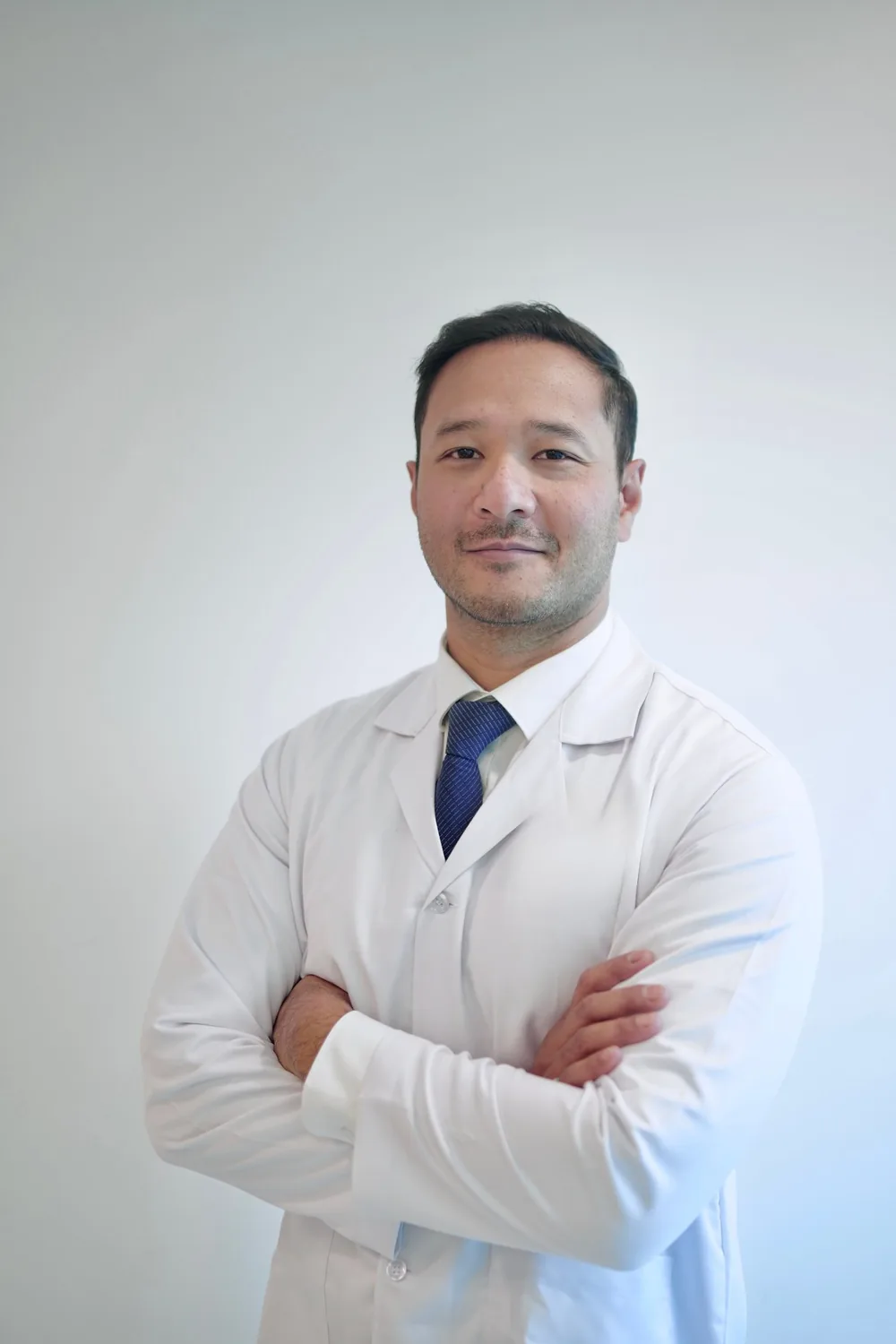
MBBS, MS (General Surgery), MRCS (Edinburgh). General and Minimal Access Surgeon with about 18 years in general, laparoscopic and laser surgery. Consults at SPARSH Hospital, Sarjapur Road (10 am – 5 pm) and his evening clinic in Doddakannelli (5 – 8 pm). KMC Reg. No. 96096. More about Dr. Sanjit